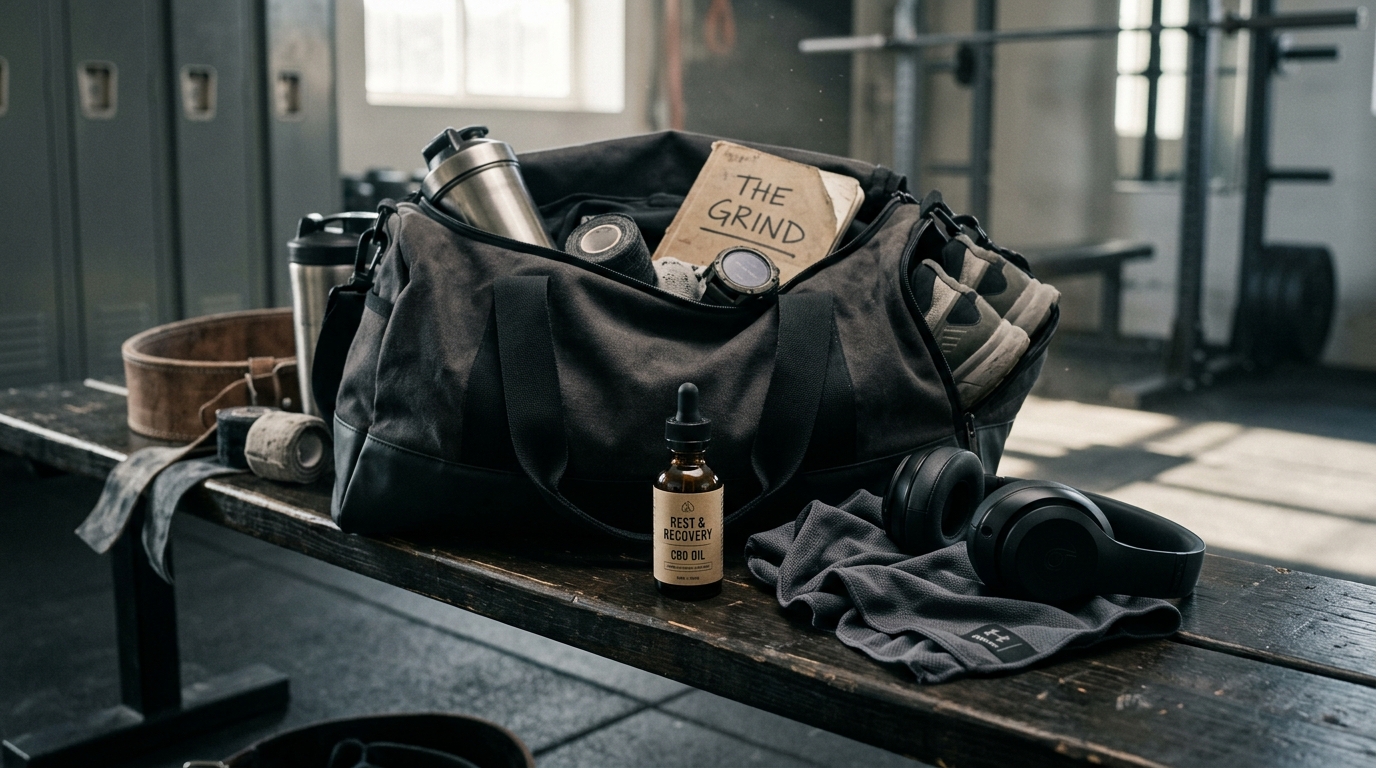
A positive drug test can end a season, and the ingredient list on a recovery product is not always an accurate guide to the result. For athletes, CBD oil sits in an odd spot: the compound itself is allowed under the world’s main anti-doping code, while products containing it can still cause a violation. The gap between those two facts is where careers get complicated.
What the Rulebook Says
WADA’s position
The World Anti-Doping Agency (WADA) publishes the Prohibited List, a document updated every year. The code behind it is used by more than 600 sports organizations, including the International Olympic Committee and the U.S. Anti-Doping Agency (USADA). When the 2018 list took effect, WADA stated that cannabidiol was no longer prohibited. THC and its synthetic analogs stayed on it.
That split matters because CBD from hemp comes from a plant that also contains THC and other cannabinoids. Cannabinoids are banned in competition under category S8, and USADA warns that CBD products may contain other cannabinoids WADA prohibits. Training use sits outside the in-competition ban, though detection windows can stretch into a competition period.
For THC, a urine test counts as positive above 150 ng/mL of its main metabolite, carboxy-THC. WADA raised that threshold from 15 ng/mL in 2013, with the stated aim of catching use close to competition instead of weeks earlier. Its 2017 testing figures recorded 154 positive tests for THC.
USADA’s advice
USADA has addressed the question directly in a short video. Its answer: CBD is permitted, but even third-party certified products may contain other prohibited cannabinoids, and athletes are advised to avoid CBD products altogether.
The topic drew wider attention in 2021, when sprinter Sha’Carri Richardson was suspended after a THC test and missed the Tokyo Olympics. WADA responded by announcing a scientific review of cannabis, but it stayed prohibited through 2022 competitions.
| Item | Status on the WADA list (2018 onward) | Practical risk |
|---|---|---|
| Pure cannabidiol | Not prohibited | Low, if the product is genuinely pure |
| THC, natural or synthetic | Prohibited in competition | Positive above the 150 ng/mL urine threshold |
| Other cannabinoids in full spectrum extracts | Prohibited in competition under S8 | Possible violation |
| Mislabeled or contaminated products | Not a defense on its own | Violation risk the athlete cannot see |
The list is revised every year, usually taking effect in January, so the current version is the one to check.
What Athletes Hope CBD Does
Pain and recovery
Much of the interest comes from soreness. In the 2019 Gallup poll, pain was the most common reason U.S. adults gave for using CBD products, and athletes who train hard recognize that reason. Marketing leans on anti-inflammatory claims, and those rest largely on laboratory and animal work.
Controlled trials in athletes are few, small, and short, and they use a wide range of doses. The results do not support firm claims about faster muscle recovery or better performance. Anyone weighing the question should treat the benefit as unproven and the downside as concrete.
The contamination problem
The downside has a number attached. A 2017 JAMA analysis of 84 CBD products sold online found THC in about 21 percent of them, and potency on labels often missed the mark in both directions. An athlete cannot see that from the bottle.
Anti-doping rules follow a strict liability principle: athletes are responsible for whatever is in their bodies. Arguing contamination happens after a positive result, not before it.
Picture a cyclist who takes a full spectrum oil each evening for sore legs, with a label reading “THC-free.” That phrase can mean “below the lab’s detection limit,” and detection limits differ from lab to lab. A product can pass its own report and still leave a trace in a urine sample.
A Practical Checklist
Anyone who competes under an anti-doping code and still wants to try CBD oil can reduce risk with a few steps:
- Check the current WADA list and the rules of the athlete’s own federation or league
- Ask a team doctor or anti-doping contact before the first dose
- Pick isolate over full spectrum, since it leaves fewer unknowns
- Read a batch-specific lab report that shows non-detect results for THC and other cannabinoids
- Keep the receipt, the batch number, and a photo of the label in case a question arises later
- Stop well ahead of competition and keep in mind that the cutoff is not guaranteed
Sport-specific certification programs such as Informed Sport and NSF Certified for Sport test supplements for banned substances. They add a layer of screening, but they certify specific batches. USADA’s position is that certification does not remove the risk.
Medication matters too. CBD can alter how the liver processes other drugs, so a physician or pharmacist should see the full list of everything an athlete takes.
Final Thoughts
Pure CBD is not on the WADA list, and the products that contain it can still lead to a positive test. USADA advises athletes to avoid CBD products altogether, citing the chance of other prohibited cannabinoids. Evidence for recovery benefits is thin, and the contamination risk is well documented. Athletes who weigh the choice anyway should rely on current rules, isolate products, and batch-specific lab reports.